


November to February is the best time to visit Dudhwa National Park. The cooler weather, golden grasslands, and arrival of winter migratory birds make this a great time to explore. The Dudhwa safari season starts when the park opens in early November. It closes in mid-June for the monsoon season.
Tucked into the Terai region of Uttar Pradesh near the Indo-Nepal border, Dudhwa Tiger Reserve is less crowded than many wildlife destinations in India. This makes it the perfect destination for travelers who want to experience quiet wilderness.
During winters, you can expect daytime temperatures of mostly 54 to 72 degrees F. However, mornings, especially in December and January, can be foggy and cold. During summers, temperatures rise to as high as 106 degrees F. But this is also the time when animals gather near water, increasing the chances of sightings.
Here’s a month-by-month breakdown for Dudhwa National Park, so you know what to expect before planning your trip.
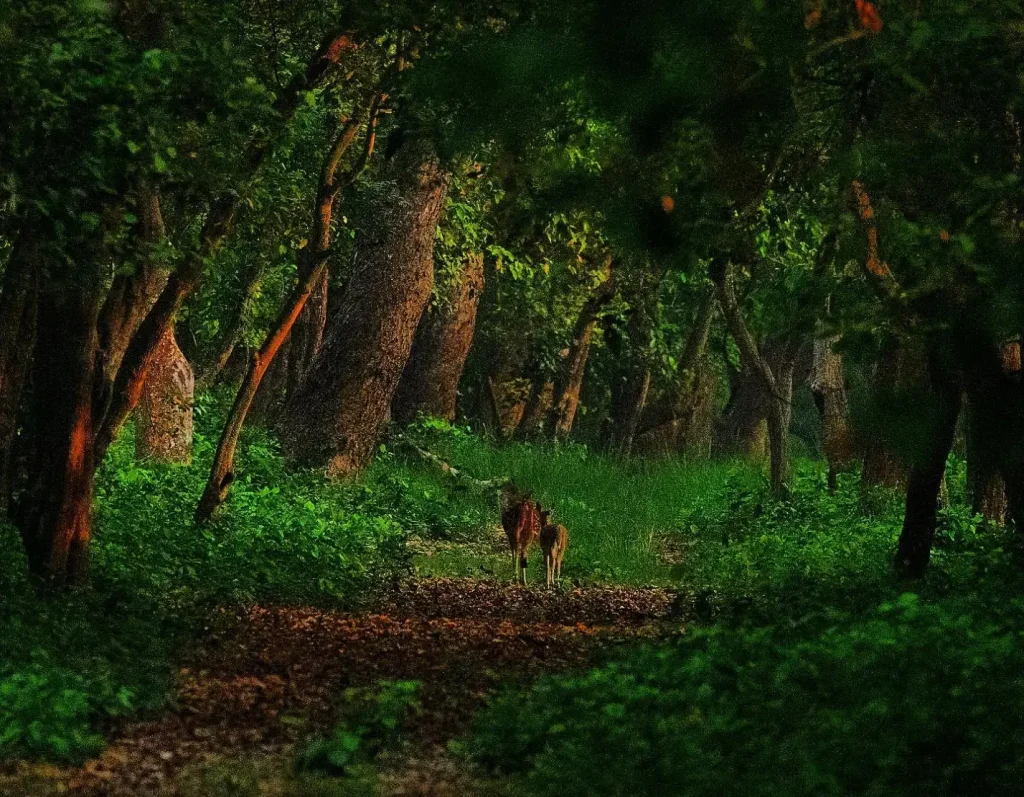
Table of Contents
Dudhwa Safari Season at a Glance
- Safari season: Early November to mid-June. The park is closed from mid-June through October for the monsoon.
- Winter (Nov-Feb): Cool mornings, golden grasslands, and daytime temperatures of 54°F to 72°F make this a pleasant season to visit. It’s also a good time to spot migratory birds and swamp deer herds.
- Summer (Mar-Jun): Hot and dry, with temperatures reaching about 84 to 106 degrees F. Best for spotting tigers, elephants, and rhinos near shrinking waterholes.
- Busiest months: December and January. Book your stay and safari early.
- Best middle ground: March and April, with strong sightings and more bearable heat.
Best Time to Visit Dudhwa National Park by Season
The best time to visit Dudhwa National Park depends on what you want to see. The Dudhwa safari season starts in early November and goes on until mid-June. While winter suits most travelers, summer is better if tigers are your priority.
Winter (Nov-Feb): Fog, Cool Safaris, and Birding
Winter is the best time to visit Dudhwa National Park for most first-time visitors. You can expect day temperatures of around 54 to 72 degrees F in December and January. November and February days run warmer, up to about 84 degrees F. Thanks to the comfortable weather, you can ride in an open jeep for hours without feeling worn out.
However, mornings can be foggy, which can push back the first drive a little. So, pack a warm jacket and gloves. The fog usually lifts by late morning, and the soft light is good for photos.
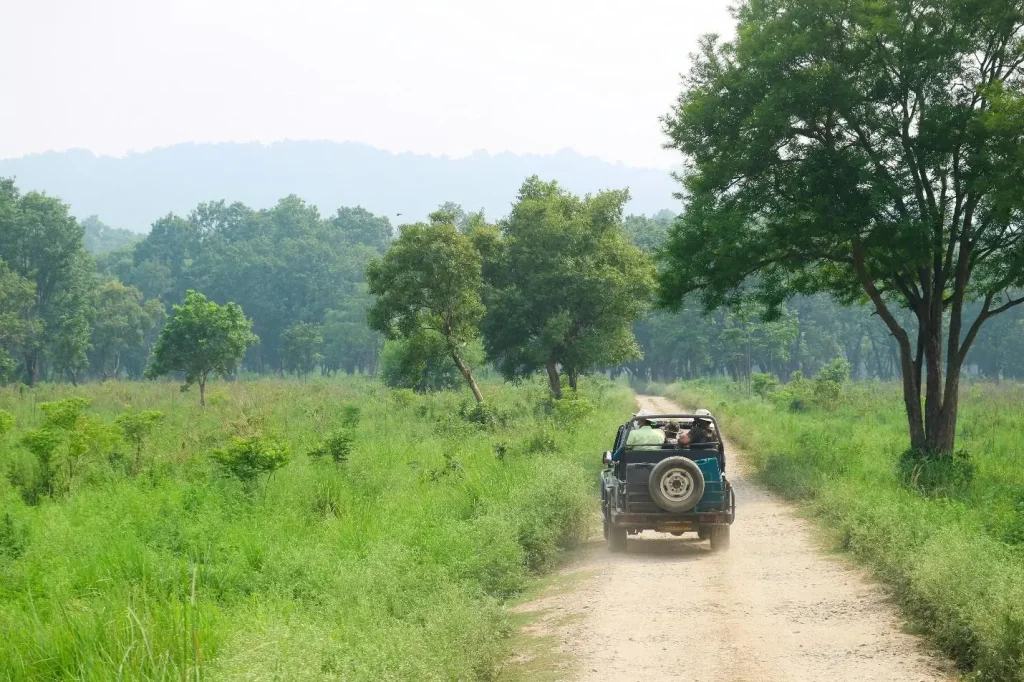
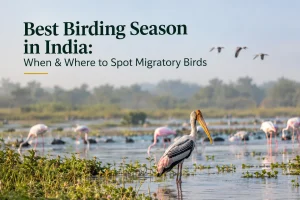
Winter is also the best season for birds. Winter migrants settle along the wetlands and grassland edges, including painted storks, bar-headed geese, and plenty of ducks. The park is also home to more than 450 bird species.
Some things to know:
- Swamp deer herds gather in Kishanpur (Jhadi Tal). You can especially spot the largest herds in the golden grass in February.
- Tigers are harder to spot in winter because of the thick foliage.
- December and January are the busiest months, and good stays near the park fill up fast, so book early.
Summer (Mar-Jun): Wildlife Sightings Near Water
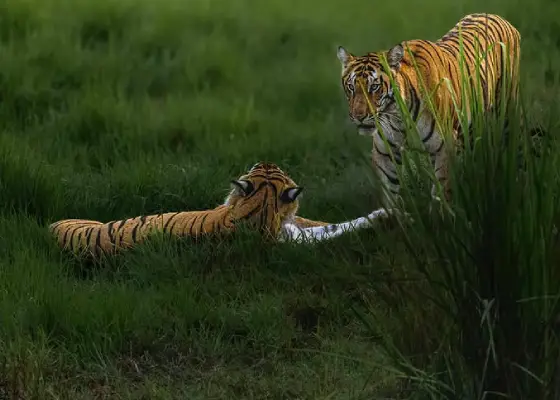
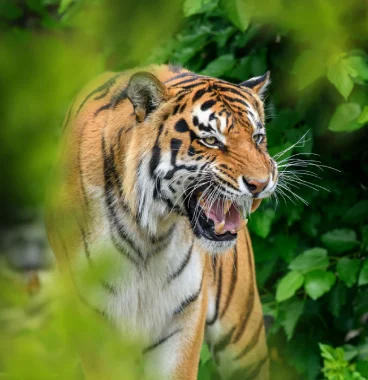
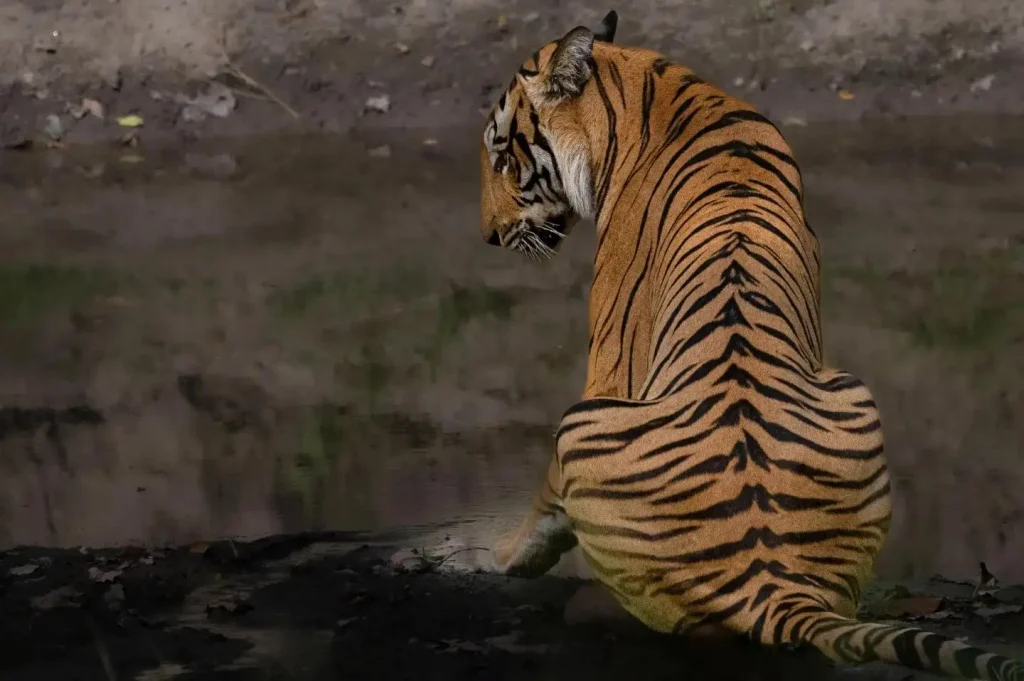
Summer is the better choice if you want the best chances of spotting tigers and rhinos. As the grass dries and shortens, water sources shrink, and animals have to share a few remaining water points. That is why summer sightings near water are so reliable.
You can see tigers, sloth bears, elephants, and the one-horned rhino, with clearer views through the sparse vegetation. If elephants and rhinos are your main targets, consider an Elephant & Rhino Wildlife Photography Tour. May is the peak month for tiger sightings.
However, the trade-off is heat. Expect temperatures from about 84 to 106 degrees F. As such, it is best to take the early morning drive, rest at midday, and head out again in the late afternoon. Don’t forget to drink plenty of water, and wear light cotton clothes and a hat.
If you’re planning to visit during the summer months, March and April offer the sweet spot. The heat is still manageable, the grass is short, and sightings are strong.
Monsoon (Mid-Jun to Oct): Park Closure
Dudhwa National Park remains closed from mid-June until early November. The closing date can change if the monsoon arrives late. The Dudhwa monsoon closure protects the park during the breeding season and keeps visitors out while the terrain floods. Entry is strictly restricted during this time.
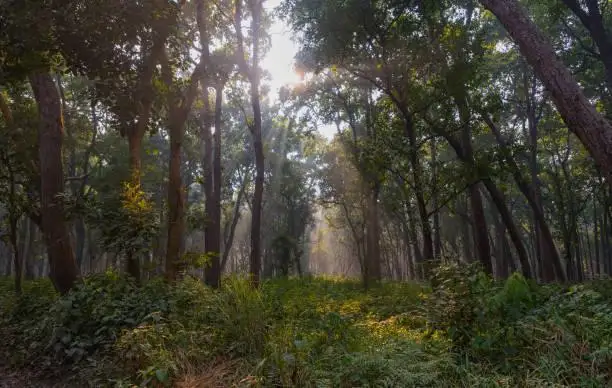
The rains are often accompanied by cooler, windy weather with thunderstorms. Nights stay warm, at about 75 degrees F. The rain also helps the park’s plant life grow and recover.
It’s not a time for a safari, so plan your trip within the November to June window.
Dudhwa Winter vs Summer: Which Is Better?
While the winter months are best for most travelers, summer wins if your main goal is seeing a tiger. Here’s a detailed Dudhwa winter vs summer comparison, so you can plan your visit around the right season.
| Factor | Winter (Nov-Feb) | Summer (Mar-Jun) |
|---|---|---|
| Daytime temperature | About 54 to 72 degrees F (warmer in November and February) | About 84 to 106 degrees F |
| Weather | Cool and misty, with foggy mornings | Dry and hot |
| Best for | Birdwatchers, families, first-timers | Wildlife photographers, adventure travelers |
| Main wildlife | Migratory birds, swamp deer herds | Tigers, sloth bears, elephants, one-horned rhinos |
| Tiger sightings | Harder, thanks to thick foliage | Best of the season, peaking in May |
| Watch out for | Cold, foggy mornings and crowded peak months | Midday heat |
Best Time to Visit Dudhwa National Park: Month by Month Guide
| Month | Typical Daytime Temperature | Typical Nighttime Temperature | What to Expect | Why Visit |
|---|---|---|---|---|
| November | 84 degrees F | 54 to 59 degrees F | Cool mornings | Gentle start to the season |
| December | 72 degrees F | 48 degrees F | Cold, foggy | Peak winter |
| January | 68 to 72 degrees F | 45 to 48 degrees F | Cold, foggy mornings | Coldest month, great for birding and photos |
| February | 75 to 81 degrees F | 48 to 50 degrees F | Cool mornings | Smaller crowds, good all-around month |
| March | 84 to 91 degrees F | 57 degrees F | Warm days begin | Animals get easier to spot |
| April | 95 to 104 degrees F | 64 to 68 degrees F | Hot and dry | Short grass, strong sightings near water |
| May | 106 degrees F | 72 degrees F | Hottest month | Big animals gather at water most |
| June (to mid-June) | 104 to 106 degrees F | 77 degrees F | Hot, then the first rain | Last stretch before the closure |
November-December
November is a good month to ease into the winter season. The days are still warm, getting cooler mostly in the mornings and at night. By December, you’re in peak winter, with nights near 48 degrees F.
January-February
January is the coldest month, so pack accordingly. February is a little warmer and quieter, making it a great all-round choice for a Dudhwa visit.
March-April
March marks the start of the summer season. The grass starts to dry, and animals become easier to spot. April brings hot days, but the short grass and strong sightings near water make it a good bet for big cats.
May-June 15
May brings the highest temperatures, but also better chances of spotting large animals near water. If you don’t mind the heat, this can be a rewarding time to visit. The first rains arrive in June, ahead of the park’s seasonal closure.
Which Month Should You Select?
The best time to visit Dudhwa National Park depends on what you want most from the trip. So, pick your month first and plan the rest of your vacation around it. If you’re unsure, December is the easy choice for first-timers, because the weather is comfortable and the birds are in full swing. Here is how to match the month to your goal:
- Birds and photos: December or January
- Cool weather with slightly smaller crowds: February
- Comfort plus good sightings: March or April
- Families: December or February
- Strongest animal movement: May, if the heat doesn’t bother you
Skip May and June if you’re traveling with parents or young children, since the heat can be quite strong. We’d also suggest leaving some buffer time in your itinerary, as fog, permits, and safari slot schedules can all affect the flow of your safari day.
What to Pack for Each Season?
Whichever month you pick to visit Dudhwa National Park, pack for the morning, not the afternoon. An open jeep on a winter morning can feel much colder than the daytime temperature suggests.
- Winter (Nov-Feb): A wool cap, a scarf, and a light layer to swap in for the afternoon.
- Summer (Mar-Jun): Sunglasses, sunscreen, and one water bottle per person.
- All season: Neutral, earth-toned clothes, insect repellent, basic medicines, and the photo ID you used at the time of booking.
Choosing the Best Time to Visit Dudhwa National Park
There isn’t one perfect time to visit Dudhwa National Park. It all depends on what you want from the trip. Winter brings cool mornings, migratory birds, and a slower pace. Summer, on the other hand, offers better chances of spotting tigers as the grass gets shorter and animals gather around water.
Need help with the rest? Jungle Revives designs every India safari around your interests, pace, and travel style, not a fixed template. You can customize your accommodation, meals, transfers, safari vehicle, expert wildlife naturalist, and wildlife photography focus.
Get in touch to customize your Dudhwa trip today.
FAQs
What is the best time to visit Dudhwa National Park?
The best time to visit Dudhwa National Park depends on what you want to see. Winter (November to February) is best for comfortable weather and migratory birds, while summer (March to mid-June) gives you better chances of spotting tigers and other big animals. Most first-time visitors prefer the winter months.
Is Dudhwa National Park open in October?
No. The park closes in mid-June for the monsoon and stays closed through October. The safari season starts again in early November, so plan your trip within the November to June window.
Which is better, Dudhwa in winter or summer?
Winter is usually more comfortable, with cool air, misty mornings, and plenty of birdlife. Summer, on the other hand, is better for wildlife sightings because animals gather around shrinking water sources. However, the heat can go past 100 degrees F. March and April offer a middle ground.
When is the best time to see tigers in Dudhwa?
Your chances of spotting a tiger are generally higher in the summer. This is because the grass is short and water is scarce, so animals show up at the same few water points. Tigers are harder to spot in winter because the foliage is thick. For other parks, see the best time for tiger safari in India.
When is the best time for birdwatching in Dudhwa?
Winter, from November to February, is the best time for birdwatching in Dudhwa. Migratory birds settle in the wetlands and grassland edges, including painted storks and bar-headed geese. The park also has more than 450 bird species.